24 Junie 2018

Navorsing in Port Elizabeth

Op Saterdag 23 Junie het 'n paar lede van Jbay se Geselsgroep die GGSA Oos-Kaap se genealogiese biblioteek besoek om navorsing te doen.


Vooraf is 'n lys, van boeke beskikbaar, na lede gestuur om dit makliker te maak om voorbereiding te doen om die maksimum voordeel uit die oggend te kon kry.


'n Hele paar verlore voorsate is opgespoor maar die ontdekkings het in sekere gevalle gelei tot nuwe inligting met nuwe vrae en uitdagings.


Ken Garvie het gehelp om inligting te deel en die nodige boeke aan te beveel en ook help soektogte doen op die internet. Eleanor het die besoekers bederf met eet en drinkgoed en 'n heerlike lasagne vir middagete.


'n Baie suksesvolle oggend vir almal wat daaraan deelgeneem het en die biblioteek sal beslis weer besoek word. Groot waardering vir Ken en Eleanor).
Rob & Maureen saam met Ken (voor links)

02 Junie 2018

Toekenning

Hester Marx van Loerie het onlangs die Goue Banier 2018 toekenning van die Genealogiese Genootskap van Suid-Afrika ontvang.


Die Goue Banier word toegeken in erkenning van uitsonderlike diens aan die Genootskap.


Hester plaas reeds jare lank inligting oor sterfkennisgewings wat in Die Burger veskyn op SAGen en verskaf so waardevolle inligting aan ander navorsers.


Hester Marx en Alan Montgomery, Voorsitter van GGSA Ooskaaptak

18 Februarie 2018

History of Jeffreys Bay


By Bert Behrens.


Portugal's Prince Henry the Navigator, was born on 4 March 1394,Porto, Portugal. He was the fifth eldest child of King John I of Portugal and Philippa of Lancaster England.
 Prince Henry, founded his Institute which included, Libraries, Astronomical Observatory, Ship Building Facilities and he also built the Church of the Navigators in the south of Portugal in the small Village of Sagres. Price Henry died in Sagres on the 13 November 1460, aged 66 years and was buried in a tomb in the Batalha Monastery.
  Soon after his death King John II assumed the responsibility of discovering the sea-route to India and the thriving and lucrative spice fields of the East.
  In August 1487, King John II was present at the dockside to finally brief the Portuguese explorer Bartholomew Dais and his men who were due to set sail from the small port of Belem, on the Tagus River in Lisbon Portugal, and head for the African Coast. Along the way Dias planted many Padrãos.
  His fleet then sailed around Cape Point and up the east coast of Africa. In In 1488 after passing the dangerous Tsitsikamma coastline they anchored in a bay which Dias named "Golfo dos Pastores", which is Portuguese for Bay of the Shepherds. This was because of the many Aboriginal herdsman, probably “Strandlopers”, which were seen, on shore driving their cattle and sheep, from his Caravel.
  St. Francis Bay stretches from Cape Receife in the east to Cape St. Francis in in the west. The area today know as Jeffreys Bay, with Port Elizabeth and the Gamtoos River lying to the east of it and St. Francis, Cape St. Francis, the Krom River and Tsitsikamma to the west was inhabited many, many years ago by coastal Aboriginals. Proof of this was discovered way back in the early 1900's Mr R W FitzSimons, who at that time was the Director of the Port Elizabeth Museum and Snake Park, (today Bay World), when he excavated a rock cave in the Outeniqua Mountains near the Tzitzikama coast in an area which was once occupied by the early coastal Aboriginals. (possibly Khoikhoi Cave dwellers or Strandlopers).Here he unearthed a number of skeletons, many of which can be seen in a photograph that was taken of him sitting inside the cave with the skulls displayed on the ground around him.
  The fact that “Strandlopers” once roamed these shores was once again proved to be true when a valuable archaeological discovery was made between the Kabeljouws and Gamtoos Rivers. In 1997 whilst walking on the beach Kobus Kobus Reichert and Bianca Fenner discovered a partly exposed skeleton lying in the sea sand near a shell midden. They reported their discovery to Dr Johan Binneman of the Albany Museum in Grahamstown who excavated the site. At the time it was thought that the skeleton had lain under the sand for about 600 years.
  Manuel de Mesquita Perestrelo, a Portuguese navigator and cartographer, was commissioned to chart the coast of Africa. In 1575 when his fleet anchored in the bay already named “Golfo dos Pastores” by Dias, he renamed the bay “Bahia de St. Francisco”, again Portuguese,in English St. Francis Bay), in honour of the patron saint of sailors. It is also believed that incorrect charts and maps drawn up by Perestrelo, caused many shipwrecks along the Tsitsikama Coast because water was shown where land actually existed. A Monument to Discoverers is situated on the banks of the Tagus River in Lisbon Portugal.
 

15 Junie 2017

Die groot brande van 1869 en 2017

In die boek Humansdorp se Groei en Bloei 1849 - 1975 geskryf deur E J Gerryts is daar 'n hoofstuk wat handel oor die Groot Brand van 1869 en nou amper 150 jaar later is daar weer 'n groot brand in die omgewing.

03 Junie 2017

WWI UK Medals and awards during the reign of King George V (5)


General Service Medals
1. Naval General Service Medal (NGSM)
Ribbon        With Bar

Obverse           Reverse
The Naval General Service Medal (1915) was instituted in 1915 to recognize service by the Royal Navy and Royal Marines in minor campaigns that would otherwise not earn a specific campaign medal. The Army/Air Force equivalent was the General Service Medal (1918). Both these medals were replaced by the General Service Medal in 1962.

VOETSPOORTJIES VAN 'N AANGENOME KIND


Geskryf deur Engela Ferreira - Jeffreysbaai


Diė van Mary Maggs – Nelmarie Carlisle (Night)

Ek deel graag met julle die kort verhaal van ‘n aangenome kind – in hierdie geval van my dierbare vriendin Nelmarie Night.

Wie is Nelmarie en waar pas sy in ?

Ons het in dieselfde bank gewerk – ek was by die Oosrand se areakantoor en sy by die hoofkantoor in Johannesburg. Ons het net telefonies gekommunikeer met die areakantoor wat verslag  doen van verkoopsyfers aan hoofkantoor. Later is ek weg by die bank weg en het ek en Nelmarie eendag ontmoet net voor my vertrek na Engeland. Sy het ook later oorsee gaan werk en ons het mettertyd al groter vriendinne geword.
Na my terugkeer van Engeland einde 2010, gedurende  ‘n ontstuimige tydperk in my lewe, het ek in 2012 noodgedwonge by Nelmarie in haar woonstel in Krugersdorp ingetrek. Ons kon tot laat saans lekker “girlie talk” doen en sodoende mekaar ook beter leer ken - so het sy my vertel dat sy ‘n aangenome kind was en my toe eendag gaan wys waar sy grootgeword het. Sy wou baie graag net een keer by die hekke instap van haar grootword huis waar sy ‘n baie gelukkig kinderlewe gehad het. Na baie wik en weeg en ‘n onseker Nelmarie en baie aanmoediging het ons moed bymekaar geskraap en na die huis gegaan. Die nuwe inwoners is swartmense en het ons baie skepties laat inkom. Nelmarie kon met hartelus praat oor wat haar aangenome pa alles in en om die huis gedoen het waarvan daar steeds ‘n blywende bewys was. Haar slaapkamer se venster, die van haar haar sussie en boeties, die sonnige stoepie waar hulle kon hardloop, lag en speel.


Ons het fotos geneem en dit vergelyk met jare terug waar sy saam met die gesinnetjie voor dieselfde huis afgeneem is. Sy het ‘n liefdevolle familielewe gehad en was baie bederf want sy was dan die jongste (laatlam). Niemand het haar ingelig dat sy ‘n aangenome kind was nie – daardie jare het jy mos nie durf praat daaroor nie.

01 April 2017

WWI UK Medals and awards during the reign of King George V (4)


Bravery, Distinguised Conduct & Conspicious Medals


1. Distinguished Conduct Medal (DCM)

Ribbon           Ribbon with bar
Obverse                Reverse
The Distinguished Conduct Medal, (oldest British Award for Gallantry), was established on 4 December 1854 by Queen Victoria, during the Crimean War, as a decoration for gallantry in the field to Warrant Officers, Non-Commissioned Officers and men for "distinguished, gallant and good conduct in the field". For all ranks below commissioned officers, it was the second highest award for gallantry in action after the Victoria Cross.

28 Maart 2017

WWI UK Medals and awards during the reign of King George V (3)

The British Gallantry Decorations and Bravery Awards


1. Victoria Cross (VC)

Ribbon
Blue Ribbon                 Red Ribbon

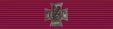
The Victoria Cross was instituted on 29th January 1856. This is the highest award for gallantry. It is awarded for an act of outstanding courage or devotion to duty in the presence of the enemy. All ranks were, and still are, eligible when serving with the British and Commonwealth armed forces. Until April 1918 the medal ribbon issued with the Victoria Cross was red (or crimson) for Army recipients and blue for Navy recipients. The VC is designed in the form of the Maltese Cross: in the centre of the medal is a lion guardant standing upon the Royal Crown. The words "For valour" are inscribed below. A miniature cross emblem is worn on the ribbon alone in undress uniform.

23 Maart 2017

WWI UK Medals and awards during the reign of King George V 1910-1936

WWI UK Medals and awards during the reign of King George V 1910-1936, compiled by Tiaan Jacobs, DWD June 2016


The majority of the British medals and clasps are made of solid silver, though some were issued in bronze versions. The majority of the British campaign awards are circular, usually 36mm in diameter.
The British Campaign Medals


A Service Medal is awarded to all those who meet a particular set of criteria. These criteria are usually that an individual has served in a specific area, usually for a specified minimum time between set dates.

22 Maart 2017

WWI UK Medals and awards during the reign of King George V (2)

5. Mercantile Marine War Medal

Ribbon
Obverse                           Reverse
The medal was established in 1919. The Board of Trade awarded this campaign medal, the Mercantile Marine War Medal, to people who had served in the Merchant Navy and who had made a voyage through a war zone or danger zone during the 1914-1918 war.


6. Military Territorial Force War Medal
Ribbon
Obverse                                                                              Reverse
Instituted on 26th April 1920. Only members of the Territorial Force and Territorial Force Nursing Service were eligible for this medal. They had to have been a member of the Territorial Force on or before 30th September 1914 and to have served in an operational theatre of war outside the United Kingdom between 5th August 1914 and 11th November 1918. An individual who was eligible to receive the 1914 Star or 1914/15 Star, could not receive the Territorial War Medal.

7. Allied Subjects’ Medal

Ribbon
Obverse                           Reverse


The Allied Subjects Medal was instituted in 1922 and awarded by the Foreign Office to Allied personnel who, at risk to their own lives or liberty, assisted British soldiers behind enemy lines during the War of 1914 to 1918.


8. Women's Service Awards (British Red Cross Society War Service)
                                                                     Obverse                       Reverse                              
Instituted in 1920 this medal was awarded to members of the British Red Cross or its voluntary aid detachments who served in the UK between 4 August 1914 and 31 December 1919 and were therefore not eligible for British military medals. Those who were eligible had to undertake at least 1,000 hours of unpaid service, or be ambulance drivers and bearers who gave 500 hours unpaid service.